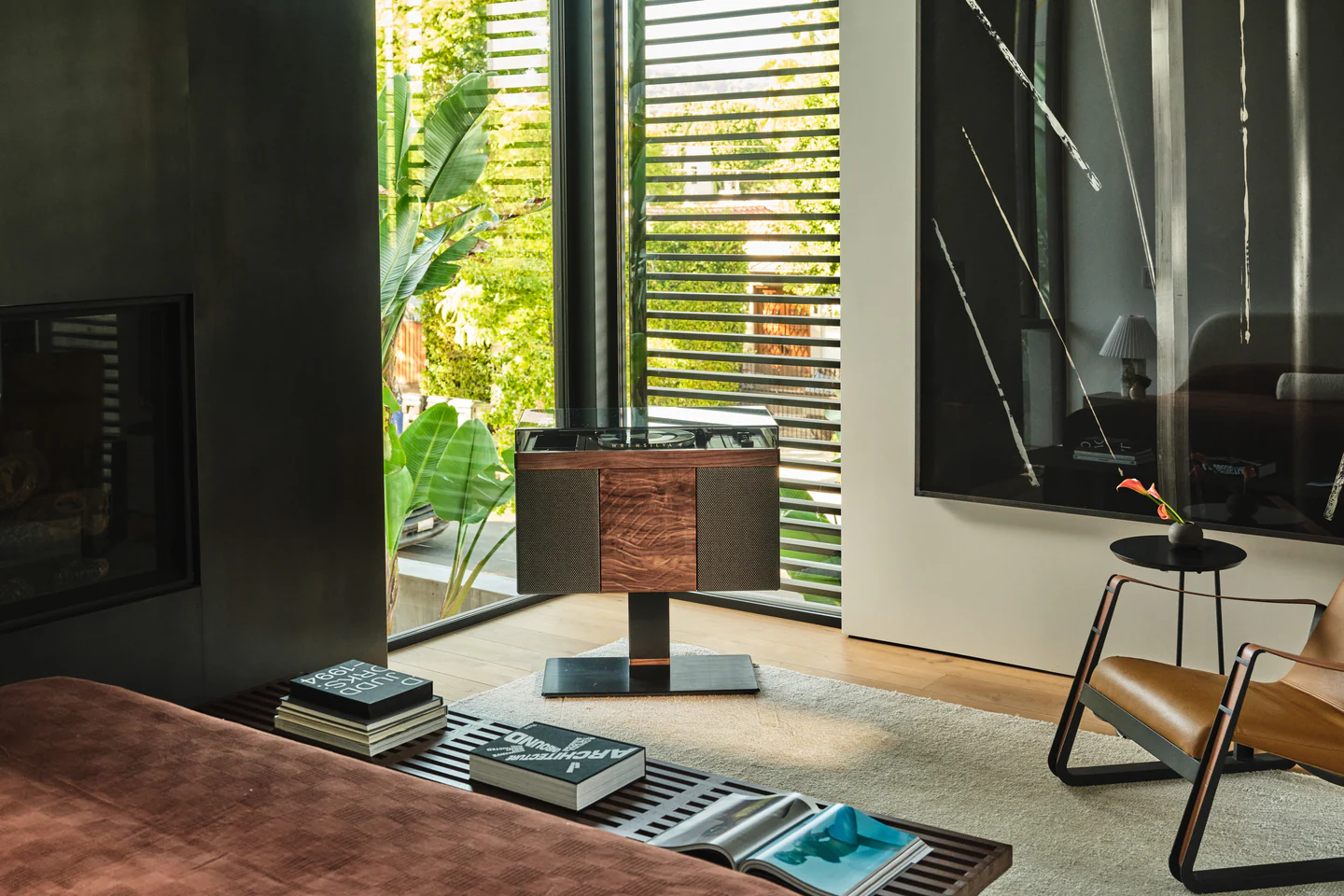
The market for vinyl player cabinets has grown alongside the vinyl resurgence. More buyers want a record setup that looks finished in the room instead of a stack of components sitting on temporary furniture.
That demand has created a gap many shoppers do not notice at first. A lot of the category solves the interior design problem better than the audio problem.
The cabinet may look good in a living room, but the system inside often tells a different story. A basic turntable, a small amplifier, and compact speakers can make the product feel complete in a photo while leaving the sound quality underdeveloped.
The bigger issue is vibration. When the turntable and speakers share the same cabinet, bass energy can move through the furniture and reach the stylus.
Once that happens, the stylus can pick up cabinet vibration as noise. The result is the muddy or boomy quality that has followed console-style record furniture since the midcentury era.
That does not mean the category is flawed. It means a serious vinyl player cabinet has to be engineered as an audio product, not only styled as furniture.
The Audio Side Buyers Cannot See In A Photo
Amplification is one of the first places to look because it determines how cleanly the system can drive the speakers. A small amplifier may work at low volume, but it can distort when asked to fill a larger room.
Wrensilva uses 200 watts per channel, which gives the system the headroom needed for cleaner playback at higher output. That kind of power matters because it keeps the sound controlled instead of strained.

Speaker quality is harder for a buyer to judge from a product page. This is also where many cabinets cut costs, since the speakers are hidden inside the furniture and easy to treat as secondary.
A serious cabinet needs speakers designed for the enclosure they occupy. Wrensilva’s work with Giles Martin and Manny Marroquin reflects that approach, with audio development shaped by people who understand how records should sound in a room.
Turntable isolation is the most important engineering challenge in this format. A standalone turntable can be placed away from speaker vibration, but an integrated cabinet has to solve that problem internally.
Wrensilva addresses this with a multi-layer isolation system and a floating turntable design. That is the kind of detail that separates a cabinet built for listening from one that simply has a turntable installed inside it.
The Furniture Side Still Matters
The furniture still has to justify its place in the room. A cabinet this visible cannot be treated like audio equipment that happens to need a stand.
Materials are part of that evaluation. Solid hardwood ages differently than cheaper cabinet construction, and it gives the piece a more lasting presence as the room changes around it.
Wrensilva’s hardwood options include walnut, mahogany, and white oak finishes that are meant to feel closer to furniture than equipment housing. That matters because a large audio cabinet has to live comfortably alongside seating, lighting, and other finished pieces.
Scale is another point buyers should not overlook. A cabinet that contains real speakers, record storage, and proper turntable isolation needs physical volume.
That is why a well-designed cabinet should feel substantial rather than oversized. Wrensilva’s M1 and The Standard are scaled more like credenzas, which gives the audio system the internal space it needs while allowing the piece to anchor a wall.
Customization also matters in a furniture category. Wood finish, leg finish, and speaker fabric can determine whether the cabinet looks intentional in the room or merely close enough.
Why Integrated Design Changes The Result
A traditional component system gives the buyer control over each piece. The turntable is chosen separately, the amplifier is chosen separately, and the speakers are matched afterward.
That approach can work very well, but it places the burden of integration on the buyer. The room then has to absorb the visual result, with cables, stands, and components all needing a place to go.
A serious stereo console changes that equation. The audio system is designed around the cabinet, and the cabinet is designed around the audio system.

The amplifier has to supply the right power for the speakers. The speakers have to perform inside the cabinet’s internal space. The turntable has to remain isolated from the vibration that the rest of the system creates.
That is the difference between assembling parts and engineering a complete listening system. The best cabinets are not trying to hide audio equipment inside furniture; they are making the furniture part of the audio design.
Wrensilva’s collaborations with Giles Martin and Joe Harley point to that integrated standard. The sound was not treated as an afterthought that could be added once the cabinet looked right.
Digital Integration Keeps The Cabinet In Daily Use
A cabinet that only plays vinyl can be beautiful and still sit quiet most of the week. For many households, daily listening now moves between records and digital sources without much ceremony.
That makes connectivity more important than it may seem during the buying process. The turntable may be the emotional center of the piece, but digital access often determines how often the cabinet actually gets used.
Wrensilva’s Sonos integration helps close that gap. With vinyl playback alongside Sonos, Bluetooth, auxiliary input, and external phono capability, the cabinet can serve more than one listening habit.
That does not diminish the role of vinyl. It makes the cabinet a daily audio system instead of a special-use object waiting for the next record night.
The Difference Between Furniture And A Listening System
A vinyl player cabinet should earn its place in the room twice. It has to look right as furniture, and it has to perform well enough that the sound justifies the space it occupies.
Most weaker products only clear the first test. They photograph well, match a design trend, and create the appearance of a finished listening setup.
The stronger products are built around the harder problem. They account for power, speaker behavior, vibration control, and the way people actually listen at home.
That is where Wrensilva separates itself from the broader category. Its cabinets are designed as complete systems, with the furniture and audio decisions developed together instead of forced together at the end.
The real distinction is simple. One product is a piece of furniture with a turntable in it, while the other is a properly engineered listening system that happens to be beautiful.
Wrensilva
+18002926353
1995 Main St, San Diego, CA 92113